Back to Poems

To a Poet

To a Poet

Alexander Pushkin
Alexander Pushkin

About Alexander Pushkin

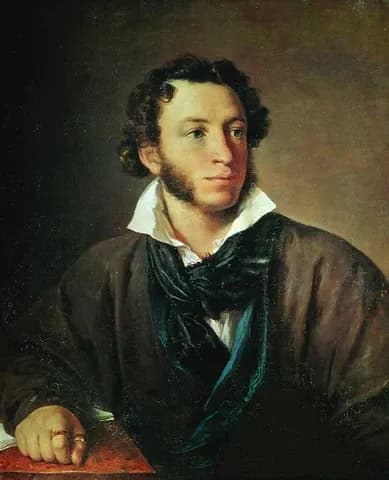
Alexander Pushkin (1799-1837) is the jewel of Russian poetry, also famous as a playwright, prose writer and publicis who made a great contribution to the development of the Russian literary language. A prominent mid-19th-century Russian literary critic noted that Pushkin “was the first to give Russian literature the status of the whole nation’s matter… He became the first poet, who in the eyes of Russian people took that high place, which a great poet should take in his country”.

About This Poem

Among other Pushkin’s poems reflecting upon the special role of a Poet in life, the following one is probably the most well-known. At the core of the poem lies an aristocratic and stoic conception of art: the poet is a sovereign (“You are a king”) who answers only to himself. Pushkin frames poetic creation as both a noble calling and a lonely one, defined by discipline, self-scrutiny, and indifference to public validation.
Video Performance
Opens in new window

Поэ́т! не дорожи́ любо́вию наро́дной.

Восто́рженных похва́л пройдёт мину́тный шум;

Услы́шишь суд глупца́ и смех толпы́ холо́дной,

Но ты оста́нься твёрд, споко́ен и угрю́м.


Ты царь: живи́ оди́н. Доро́гою свобо́дной

Иди́, куда́ влечёт тебя́ свобо́дный ум,

Усоверше́нствуя плоды́ люби́мых дум,

Не тре́буя награ́д за по́двиг благоро́дный.


Они́ в само́м тебе́. Ты сам свой вы́сший суд;

Всех стро́же оцени́ть уме́ешь ты свой труд.

Ты им дово́лен ли, взыска́тельный худо́жник?


Дово́лен? Так пуска́й толпа́ его́ брани́т

И плю́ет на алта́рь, где твой ого́нь гори́т,

И в де́тской ре́звости коле́блет твой трено́жник.

Poet, don’t prize the love of people.

The momentary hum of excited praise will pass.

You will hear fool’s judgement and laughter of the cold crowd,

But you, stay firm, calm and sullen.


You are a king: live alone. Along the free path

Go wherever your free mind is leading you.

Improving the fruits of your favorite thoughts,

Not demanding rewards for your noble feat.


They are inside you. You are your own high court;

You are able to judge your work stricter than anyone.

You, the exacting artist, are satisfied with it?


Satisfied? So let the crowd condemn it

And spit on the altar where your fire burn,

And, in its childish playfulness, shake your tripod.*


*an allusion to the Delphic oracle